



Antistatic Resin
Introduction
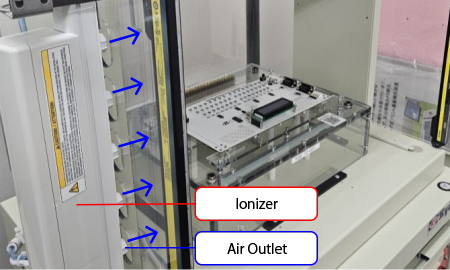
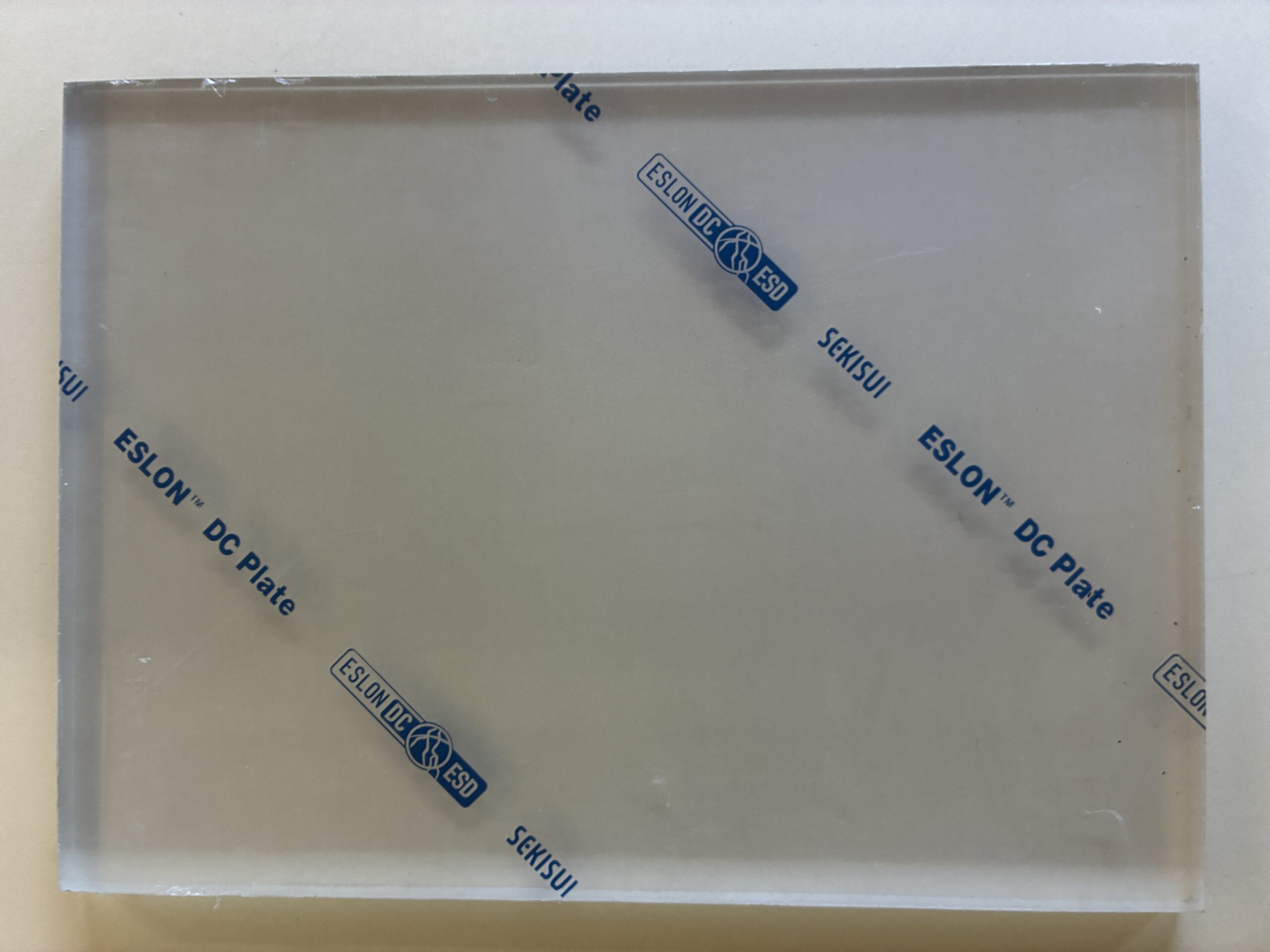
Protection against component damage caused by electrostatic discharge (ESD) is an important consideration in PCB test. Static buildup on resin fixture components that contact workpieces can lead to discharge and ESD damage, so antistatic resin materials are used to mitigate this risk.
Details
Antistatic resins are created by adding conductive fillers (such as carbon) to normally high‑resistance insulating resins or by applying conductive surface coatings, preventing static charge buildup. Terms such as “antistatic,” “static dissipative,” and “ESD protective” are commonly used.
According to IEC 61350‑5‑1, materials are classified by surface resistivity as follows:
- Electrostatically Conductive Materials: ρ = 1×10^2〜10^5 Ω/sq or lower
- Electrostatically Insulative Materials: ρ = 1×10^11 Ω/sq or higher
- Electrostatically Dissipative Materials: ρ=1×10^5~11[Ω/sq]
Metals exhibit even lower resistivity and fall into the conductive category.